Please Sign Up As A PAID Subscriber: Remember, I’m only on Substack because VDARE was forced to suspend operations by NYAG Letitia James’s lawfare, so if you’re a free subscriber, please upgrade to paid!
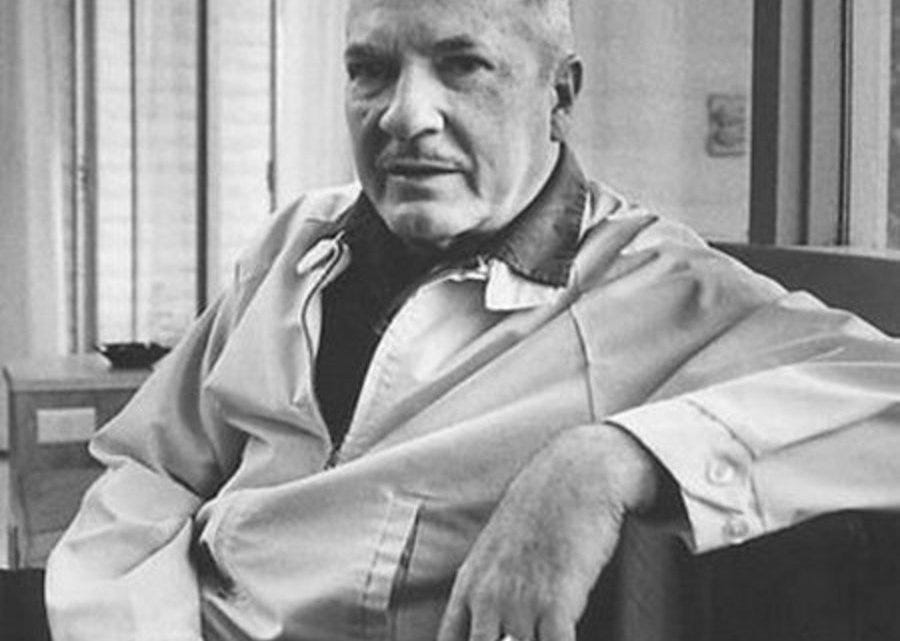
Robert A. Heinlein was born on July 7, 1907, in Butler, Missouri. That means he’s part of America’s vanished past. He was born not only before the Immigration Act of 1965, but before the Immigration Act of 1924, and he lived much of his life during America’s great Immigration Pause.
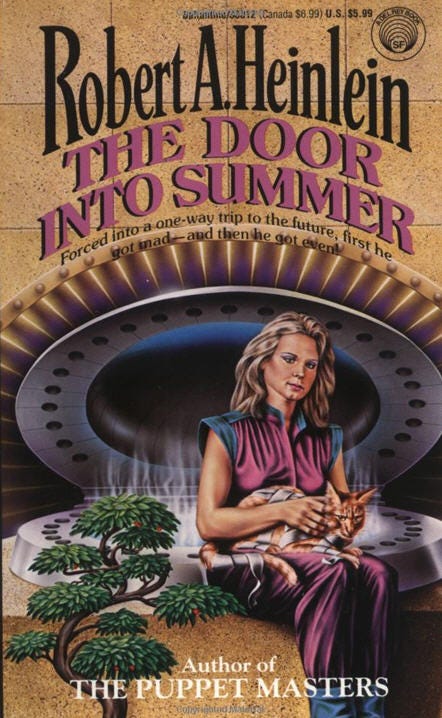
What was the last thing to go automatic? Answer: any housewife’s house. I didn’t attempt to figure out a sensible scientific house; women didn’t want one; they simply wanted a better upholstered cave. But housewives were still complaining about the Servant Problem long after servants had gone the way of the mastodon. I had rarely met a housewife who did not have a touch of slaveholder in her; they seemed to think there really ought to be strapping peasant girls grateful for a chance to scrub floors fourteen hours a day and eat table scraps at wages a plumber’s helper would scorn.
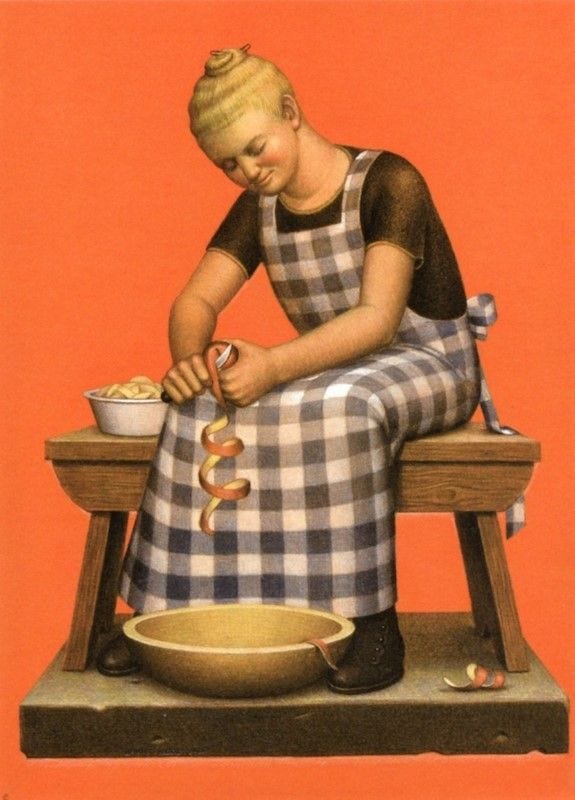
Grant Wood Hired Girl with Apples 1935...
That’s why we called the monster Hired Girl—it brought back thoughts of the semi-slave immigrant girl whom Grandma used to bully. Basically it was just a better vacuum cleaner and we planned to market it at a price competitive with ordinary suck brooms.[Robert A. Heinlein, The Door Into Summer, 1957]
The point is that in 1957, Heinlein had foreseen the possibility of an automatic vacuum cleaner, not actually marketed until 2002, but he had not foreseen the Immigration Act of 1965—he was living during the Great Pause.
In 2022, Steve Sailer wrote a post about women and work and said
A century ago, middle class women typically had a servant or two to help out around the house. Then immigration was cut back in the 1920s and when servant girls went off to work in factories during WWII, lots of bourgeois matrons had to learn in mid-life how to do numerous household chores. (In Heinlein’s The Door Into Summer, the inventor of the first home robot chooses as the brand name of his mechanical maid “Hired Girl—it brought back thoughts of the semi-slave immigrant girl whom Grandma used to bully.”)
But this was taken on mostly in a spirit of supporting a more egalitarian America. In Professor-Admiral Samuel Eliot Morison’s Oxford History of the American People, from around 1970, he inserts a page of praise for matrons like his Boston brahmin wife, who had to learn how to keep house in midlife due to the democratization of American life.
Here’s how that would play out in popular culture: this is Shirley Booth as Hazel, a white American live-in maid to a suburban family with one child, in 1961-1965 show called Hazel.
How could the family afford her? Well, according to IMDB, ”George Baxter was a highly successful corporation lawyer” and partner in a law firm.
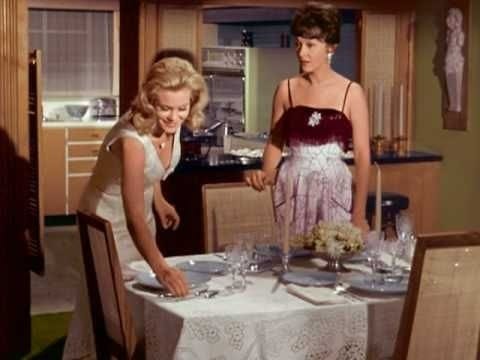
This is Samantha Stephens (the blonde), a stay-at-home wife and mother who has magic powers (Bewitched, 1964-1971) but does not have a maid. She keeps house using normal human methods, and when she has a dinner party, below, it’s a small one that she cooks for herself. Her husband is a junior executive in Madison Avenue advertising firm.
What it shows is that during an immigration moratorium, Americans can do without foreign servants, and prosper besides.
James Fulford has been writing about the national question for over 20 years, mostly for VDARE.com, more recently for WhitePapers.
The Fulford File is a reader-supported publication. To receive new posts and support my work, consider becoming a free or paid subscriber.
This is an interesting start to an article, but it seems like you stopped without really making much of a point. You got me really interested in what you had to say, and then you quit without actually saying it.
"Heinlein had foreseen the possibility of an automatic vacuum cleaner, not actually marketed until 2002, but he had not foreseen the Immigration Act of 1965—he was living during the Great Pause."




This is an interesting start to an article, but it seems like you stopped without really making much of a point. You got me really interested in what you had to say, and then you quit without actually saying it.
"Heinlein had foreseen the possibility of an automatic vacuum cleaner, not actually marketed until 2002, but he had not foreseen the Immigration Act of 1965—he was living during the Great Pause."